Ask a handful of Parks of Aledo neighbors what's new downtown and most will mention Press Cafe or maybe the newer taco spot on Camp Bowie. Almost nobody will mention the meeting that happened in Houston back in January, where a state commission quietly changed what downtown Aledo is allowed to become. That's the part worth knowing, because it explains why the storefronts you already recognize on Front Street are about to matter more, not less.
In January 2026, the Texas Historical Commission held its quarterly meeting in Houston and welcomed the City of Aledo, along with 23 other Texas communities, into its new First Street Initiative cohort. The city's own announcement went out in mid-February. If that sounds like bureaucratic housekeeping, it isn't quite that simple, and it isn't quite nothing either.
The Company Aledo Is Keeping
First Street is a statewide program run by the Texas Historical Commission, and the 2026 cohort reads like a cross-section of Texas towns that take their old downtowns seriously: Glen Rose, Cleburne, Mansfield, and Grand Prairie all made the list alongside smaller places like Hughes Springs, Rhome, and Wills Point. Aledo is the only Parker County community in the group.
Getting into the cohort doesn't come with a grant check or a construction crew. What it provides is access to the Commission's programs and services, a peer network of other Texas downtowns working through the same questions, and a structured way to identify local opportunities and share what's actually working in comparable towns. City leaders have said they plan to use that training and peer network on business support, public space activation, placemaking, and community events, which is a fairly precise description of everything that already happens around Aledo Commons.
The reason this matters to someone living in Parks of Aledo rather than someone running a shop on Front Street is timing. The city didn't ask for this designation after downtown started struggling. It asked for it while downtown is filling in, which means the framework is meant to shape what comes next rather than rescue what's already there.
"Downtown is the heart of this community," the city said in its announcement of the designation.
That's the whole thesis in five words. The rest of the release is about tools and partnerships. The five words are about what the city is actually protecting.
What Front Street Already Has
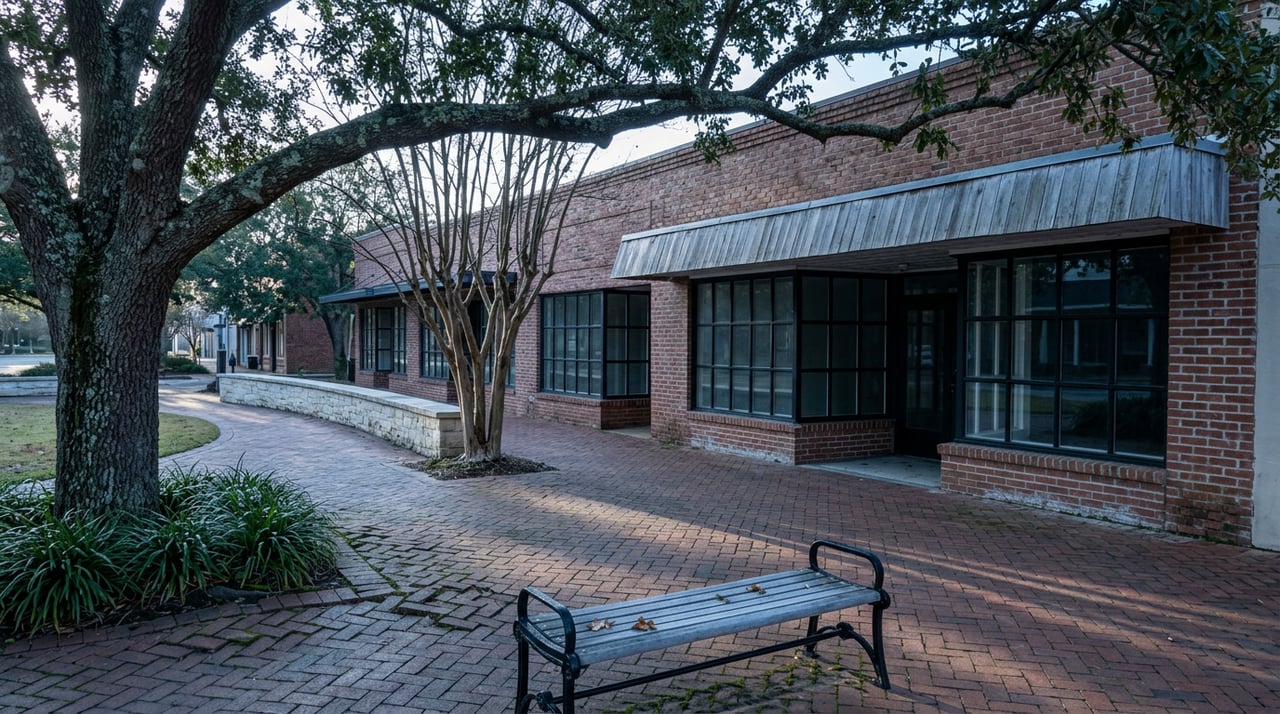
Before this designation existed, Front Street had already started to change. Press Cafe opened at 109 S. Front Street, the second location for chef Felipe Armenta after his original spot near Fort Worth's Clearfork Trailhead. It sits directly next to Aledo Commons Park, serving a full breakfast-through-dinner menu with a bar program, in a building that puts it squarely in the middle of the historic district rather than out on the highway frontage where a lot of new restaurants land.
A few blocks away, Aledo Diner has been doing the opposite thing since long before any of this was a state priority: same hours nearly every day, 6 a.m. to 2 p.m., a menu that blends classic American breakfast plates with Mexican dishes, and a dining room that regulars describe as the kind of place where the staff start to recognize your order. It is the version of downtown Aledo that existed before anyone used the word revitalization out loud.
And on Camp Bowie West Boulevard, just inside Aledo's city limits, El Chatos Tacos & Tequilas has built a following as a family-run sports bar with an unusually deep tequila selection, the kind of place that fills up for a Saturday match or a UFC card.
| Business | Location | What It's Known For |
|---|---|---|
| Press Cafe | 109 S. Front St. | Full-service breakfast through dinner, bar program, next to Aledo Commons Park |
| Aledo Diner | 213 N. Front St. | Longtime local breakfast and lunch counter, American and Mexican dishes |
| El Chatos Tacos & Tequilas | Camp Bowie W. Blvd. | Sports bar atmosphere, curated tequila list, family-run |
That's three very different businesses with three very different reasons for existing, all inside the same few blocks that the state just decided were worth a formal preservation strategy. The First Street cohort isn't creating this mix. It's arriving in the middle of it and giving the city a way to keep it from getting flattened into something more generic as growth continues.
Aledo Commons Park Is the Actual Anchor
If you're trying to picture where all of this converges, it's not really Front Street as a whole. It's the traffic circle where FM 1187, South Front Street, and Maverick Street meet, because that's where the city built Aledo Commons Park and, inside it, Aledo Veterans Plaza. The plaza itself is a paved memorial space with commemorative bricks laid in the shape of a star, a central monument representing each branch of the military, and granite benches ringing the perimeter under the flags of the United States, Texas, and the POW/MIA banner.
That same small park is also the city's default venue for its two biggest annual gatherings. Aledo Summer Blast happens the first Saturday in June, timed to kick off the season with live entertainment and vendor booths from local businesses, organized through the Aledo Economic Development Corporation. Christmas Tyme in Aledo, held the first Saturday in December, has grown into something bigger: vendor tents line the historic Front Street district, and the celebration spills into the Commons area for a tree lighting, photos with Santa, and in recent years a drone show over the park.
None of that changes because of a state designation. What changes is that a park built as a memorial and repurposed as an events lawn now sits inside a formal preservation framework whose stated goals are public space activation and community events. In plain terms, the place where Aledo already gathers is the place the state just agreed is worth protecting on purpose.
The Trail That Was Always Headed This Way
Here's the part that's easy to miss if you moved to Parks of Aledo for the newer homes and figured downtown was a separate errand. City planning materials describing the Parks of Aledo expansion laid out a trail system meant to grow from roughly 6.3 miles to about 11 miles as later phases, including a section called "The Bluff," built out along Bailey Ranch Road. Part of that plan included a connector on Pine Street tying directly into the existing trail network, which functionally links the newer subdivision to the older downtown grid on foot or by bike rather than only by car.
That plan is a few years old now, and trail buildout tends to lag behind home construction, so it's worth treating as a stated direction rather than a finished amenity. But the intent was never in question: the city wasn't planning two separate towns, a new residential pocket and an old historic core, it was planning one town with a walking and biking connection between them. A downtown preservation designation arriving on top of that plan means the destination at the other end of the trail is now getting deliberate attention at the same time the path toward it was already being built.
Reading the Next Two Years on Front Street
None of this requires you to do anything differently this weekend. But it does change what's worth paying attention to if you already live here. Watch for language in city council packets referencing First Street training or peer city visits, since that's usually where placemaking decisions get floated before they show up as actual changes on the ground. Watch the Front Street storefronts that have sat empty, since a formal revitalization framework tends to accelerate leasing conversations that might have otherwise stalled. And watch the trail signage, because a connector that finally links a Parks of Aledo cul-de-sac to Front Street is the kind of infrastructure update that gets announced quietly and then just appears one day.
The short version: downtown Aledo was already becoming a real destination before the state got involved. What changed in January is that Texas agreed it was worth protecting on purpose, at the exact moment the trail system was already pointed at it. That's not a story about property values. It's a story about which few blocks in this town are about to get more deliberate, not less, and why the walk or the ride there is only going to get shorter.
If you're the kind of person who likes knowing what's actually happening in this market before it shows up in a headline somewhere else, that's the kind of read Rees Atkins and the team put together for Parker County every week. Reach out any time you want the local view on what's changing here.